
Concerning Spelling Rules

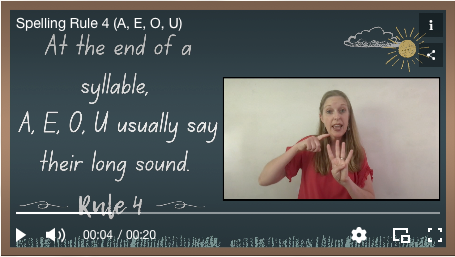
FAQ: What curriculum does your Spelling Rules align with?
I have 2 dyslexic sons, so I’m pretty passionate about spelling programs. I’ve researched and/or tried quite a few of them when I was homeschooling them in their early years. I'll give you some of my opinions below, and I'm not being compensated for any of them. :)
The short answer is that the rule numbers in our memory work correspond to the Spalding Method. They also include extra rules from and mostly include the rules from Logic of English (LOE), but the rule numbers don't usually match up. If you are in the process of researching how to teach spelling, I'll provide a little bit of context. The two programs are related. They both follow the Orton-Gillingham approach which is a structured, multisensory approach to teaching reading, writing, and spelling, particularly effective for students with dyslexia. It uses direct, explicit instruction and engages sight, hearing, and touch to help learners master sound-letter relationships step by step. Both programs utilize vertical phonics, which teaches all sounds of a phonogram at once, and require extensive review and practice of all the phonograms. Spalding came first. The Logic of English curriculum is heavily influenced by the principles established in Spalding's Writing Road to Reading. There are excellent, extensive reviews of each program available online, so I will leave you to go research those if that is something you would like to look into further. The LOE founder has some excellent videos on YouTube that explain the teaching method.
Why mention both? Again, in an oversimplification, my opinion is that LOE is better in a homeschool situation, and Spalding is better in a hybrid/University Model school situation.

If I were starting out on my homeschooling journey- I 100% would use LOE. It was hands down the BEST and most comprehensive way of teaching spelling that I used, especially with students who struggle. (But to be fair, I never actually taught Spalding.) At one point, my boys were accepted into a program at the local university that worked with students with a dyslexia diagnosis. We ended up stopping that program because LOE was more systemic, went deeper than the specialized dyslexia program, and didn't require us to drive across town in the middle of our school day twice a week. One thing that caught my attention about it was the claim that it explained the spelling of 99% of English words. All of the "exceptions" are a nightmare to dyslexic students, and I found that it did in fact cut down on the number of times I was telling my son that he'd have to just memorize a word. I recently recommended it to a friend who's son is a struggling reader, and after just a few months, she texted me to let me know it had been a game changer for their family. The hybrid school we were associated with used LOE for years, but they ultimately decided to switch to Spalding after a lengthy curriculum review of both of them. (Again- a long story. Sometimes a curriculum designed for homeschool families just doesn't work well in a hybrid school environment where teachers are doing most of the "teaching" and parents were more or less just overseeing "homework" on home days. The school was having to jettison large swaths of the weekly material in order to make it less confusing for parents.) If you are at a school looking to make this curriculum decision, feel free to reach out to me. I'm happy to share the pros and cons of implementing LOE in a hybrid school situation.
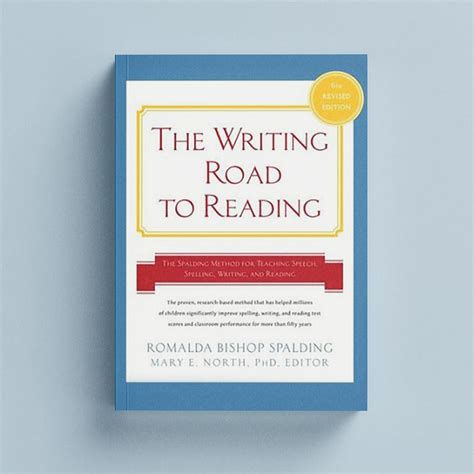
The school I was associated with is also heavily influenced by Charlotte Mason principles, ultimately, we felt like Spalding fit better with that philosophy. Spalding is a predecessor of LOE. My understanding is that Spalding works better in a classroom situation, but it is difficult to implement in a homeschool situation. One homeschool mom writes, "Unfortunately, it [Spalding's Writing Road to Reading] is quite cumbersome, and — in my opinion — rather pedantic for students who simply need to know how to read. There are people who have used it successfully, but I personally am overwhelmed by it, and feel that my students would be, too." Teachers are highly encouraged to have specific training on the method and are a subject matter expert. With a trained teacher, Spalding feels like a stripped down, more peaceful version of LOE. The teachers spent time going through the methodology more in depth on school days, and the parents were able to do the phonogram review and specific assignments that they were used on on home days. The school I was at was willing to invest in the training for teachers, and in the end, it was a good switch for them.
The creators of LOE took some of the methodology of Spalding and adapted it to be more user-friendly for a homeschool mom who may not have the time or resources to become a trained spelling expert (though she will definitely become one as she teaches it!). They scripted the weekly material and made it easier for someone from a non-teaching background to be able to implement the program. I went back and forth on which rules to use on the website. Ultimately, I went with Spalding because, at the time, that’s what our school was using, and it just seemed more streamlined. It's also worth mentioning that, at the time, they were my only customers. :) Now, I have equal amounts of customers from the homeschool world as from the hybrid-homeschool-school world... so it just is what it is.
In order to make my songs more user friendly for LOE users (or any other OG curriculum that uses explicit spelling rules with different names or numbers), I have created a set of Spelling Songs with no rule number attached. LOE users can either add in their own rule number at the end of the song, if they want to have the auditory link of the song to a rule number.
It wasn't until my own children were diagnosed with dyslexia that I realized how pervasive it is. Most resources will tell you that 20% of the population has some degree of it, and I will tell you that in my experience as a classroom teacher, I think that is pretty close. It tends to be genetic, so if you are at the beginning of your homeschooling journey and you know that you have family members who are dyslexic, it is definitely something to be looking for in your children. When choosing a spelling curriculum for your child (and especially for a school), I highly recommend using one that is based on the Orton-Gillingham approach.
Another OG curriculum worth mentioning because it is a little more gentle and easy to implement is All About Reading/All About Spelling. It doesn't go quite a deep as LOE, but it was the first program that I used with my boys that was fun, had built in repetition, and we started to see progress! It works really well in a homeschool setting. Our homeschool change from All About Reading to LOE only happened because we were moving into a school that used LOE, and I wanted my boys to be used to the LOE process.
All that to say, I'm so passionate about using an OG method for teaching reading and writing, that I included the rules in our memory work. It would have been helpful to have in our treasure chest of memory work to pull out when we were doing spelling analysis.
Do you have questions? Drop them in the comments below. I'm happy to share my experiences and help you problem solve your unique situation.